Cenotes, Ruins, and Real Culture: A Riviera Maya Itinerary Beyond the Resort
[13-MINUTE READ]
The Riviera Maya has a way of pulling you in two directions at once. On one side, there's the Caribbean, pale green in the shallows and almost impossibly blue further out. On the other, there's a limestone shelf stretching west through dense jungle, riddled with underground rivers, collapsed cavern roofs, and cities that were thriving a thousand years before anyone here spoke Spanish. Most visitors spend their week choosing one or the other. The guests who leave with the fullest memories are the ones who choose both.
This itinerary exists because the archaeology, the cenotes, and the living Maya culture around the Riviera Maya are not footnotes to a beach vacation. They are the whole reason this stretch of coast is worth the flight. A few well-planned excursions from your base at UNICO 20°87° Hotel Riviera Maya put you within reach of experiences that most travelers, even repeat visitors, never manage to string together into something coherent. Consider this your practical map for doing exactly that.
What You'll Learn in This Guide
- Which cenotes near Riviera Maya are worth the trip, and what makes each one feel different from the last
- How to sequence a visit to Tulum, Cobá, and Chichén Itzá without burning yourself out
- Where to find genuine Yucatecan and Maya food that goes beyond hotel buffets
- What cultural experiences connect you to the living Maya tradition, not just the archaeological one
- Practical logistics: distances from UNICO 20°87°, best times of day, and what to bring
- The most common mistakes travelers make and how to avoid them
Understanding the Cenotes Near Riviera Maya
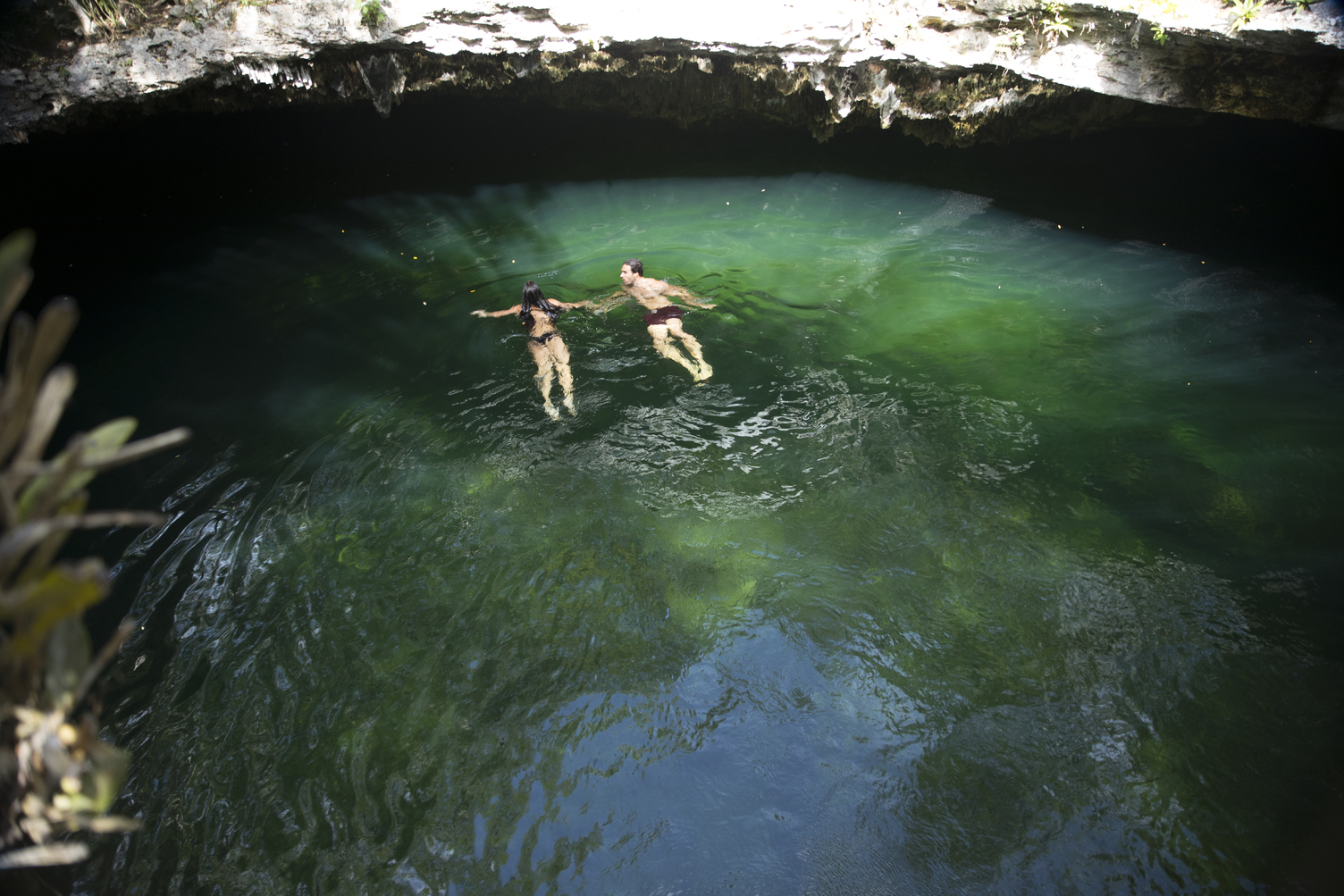
The word "cenote" comes from the Yucatec Maya word dzonot, meaning sacred well. The Yucatan Peninsula sits on a flat limestone platform with almost no surface rivers. Rainwater dissolves the rock over millions of years, carving out vast underground networks. When a cavern ceiling collapses, it reveals a cenote: a circular or oval pool of groundwater that is often connected to cave systems stretching for kilometers in every direction.
The water inside is cold by Caribbean standards, typically between 75°F and 77°F (24°C to 25°C), and it's transparent in a way that feels almost artificial. You can look down six or eight meters and count the fish. The effect is serene and slightly surreal at the same time.
The Four Types of Cenotes and Why It Matters
Cenotes come in four broad forms, and understanding the difference helps you choose rather than just ending up at whichever one a resort shuttle visits.
Open cenotes have fully collapsed ceilings and look like circular pools cut into the jungle floor. They get direct sunlight throughout the day, which makes them warmer and more photogenic in the afternoon. Gran Cenote near Tulum is the classic example.
Semi-open cenotes have partially collapsed ceilings, so you get shafts of light cutting through darkness into emerald water. These are the ones that appear on magazine covers. Cenote Dos Ojos falls into this category.
Cavern cenotes are almost entirely enclosed. You swim or snorkel by flashlight or headlamp. The water is darker and the atmosphere is genuinely otherworldly, closer to cave diving territory.
Ancient cenotes are shallow, historically significant wells that the Maya used for ritual purposes. Chichén Itzá's Sacred Cenote (Cenote Sagrado) is the most famous of these, though it isn't swimmable.
The Best Cenotes Near Riviera Maya for Different Experiences
Cenote Dos Ojos sits about 25 kilometers north of Tulum, near the entrance to Dos Ojos National Park. The name means "two eyes," referring to two connected sinkholes linked by an underwater tunnel. Snorkeling the tunnel between them is disorienting in the best way: freshwater above, saltwater below, light filtering in from both ends. The halocline, the layer where the two densities of water meet, creates a shimmering optical effect around your hands. Budget about 90 minutes for the full experience.
Gran Cenote is 4 kilometers west of Tulum on the road toward Cobá, making it a natural add-on to a Tulum ruins morning. The open ceiling means natural light floods the water by late morning, turning it a color that doesn't have a good English name. Stalactites hang into the space from cavern sections at the edges. It's one of the more accessible cenotes physically, with steps and handrails, which matters if you're bringing children or prefer not to scramble.
Cenote Ik Kil sits 3 kilometers from Chichén Itzá and is almost always visited as part of a Chichén Itzá day. It's a deep, circular open cenote with vines hanging down from the rim thirty meters above the water. The drop from the rim to the surface is vertiginous, and the pool itself is 40 meters deep. It's the most visually dramatic cenote near Riviera Maya, though it gets crowded midday. Arriving before 11 AM makes a real difference.
Cenote Azul near Puerto Morelos is shallower and better for families. There are multiple pools connected by channels, and the water is the specific shade of turquoise that the name promises. It sits about 25 minutes from UNICO 20°87°, making it one of the more convenient options for a half-day excursion.
The Mayan Ruins Riviera Maya: What to Visit and How
The ruins along this coast range from postcard-famous to nearly empty, and the experience at each site is completely different. The key is sequencing them so that you're not driving four hours on the same day you need to be somewhere early.
Tulum: The Clifftop Site Worth the Crowds
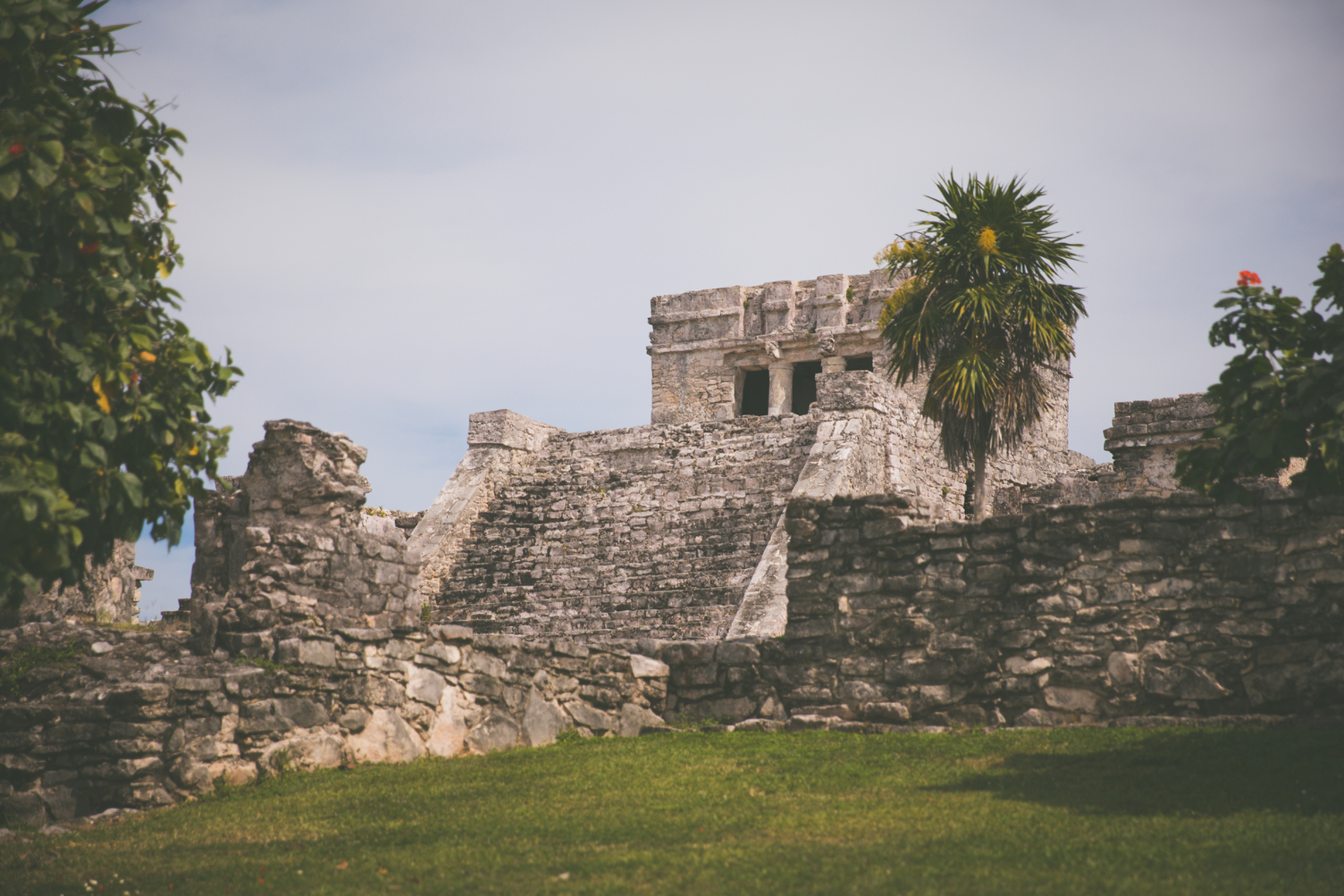
Tulum sits on a 12-meter cliff above the Caribbean, and no photograph fully prepares you for the view from the ruins out over the water. Archaeologically, it's not the most significant Maya site in the region, but spatially, it's the most dramatic. The walled city functioned as a trading port from roughly 1200 to 1521 CE, and the main structure, El Castillo, still serves as a navigational landmark visible from the sea.
Go early. The site opens at 8 AM, and temperatures climb quickly after 10 AM. By noon, the narrow lanes between structures are genuinely uncomfortable, and tour buses have filled the parking area. Arriving at 8 AM, you get golden light, thin crowds, and the morning sea breeze. The site is about 45 minutes south of UNICO 20°87°.
After the ruins, the 4-kilometer drive west along the road toward Cobá passes Gran Cenote and several smaller cenotes, making this the natural route for a combined Tulum-and-cenote morning.
Cobá: The One That Requires Effort and Rewards It
Cobá is 44 kilometers inland from Tulum, which translates to about an hour's drive on the state road through the jungle. What you find there is unlike any other Maya site in the region: a massive city spread across multiple lakes in dense jungle, connected by causeways called sacbeob (white roads).
The pyramid Nohoch Mul stands 42 meters tall and, as of recent years, remains climbable (though policies change, so confirm in advance). The view from the top is an unbroken canopy of jungle stretching to every horizon, with other pyramid peaks barely visible above the trees. Standing up there, it's easy to believe that the city below you once held 50,000 people.
Rent a bicycle or hire a bici-taxi at the entrance, because the paths between structures are long. The site is lightly visited compared to Tulum, and it's common to have pyramid staircases and plazas entirely to yourself. Allocate at least two and a half hours.
Chichén Itzá: Still Worth It, With the Right Approach
Chichén Itzá is roughly 175 kilometers from UNICO 20°87°, about two and a half hours by car or shared shuttle. The scale of the complex is genuinely staggering: El Castillo, the main pyramid, is engineered so that the setting equinox sun creates a serpent shadow descending the northern staircase. The astronomical precision across the whole site is the kind of thing you keep thinking about days later.
The crowds are real, and they peak between 11 AM and 2 PM. Options for managing this include a very early departure (leaving the hotel by 6 AM), or timing the visit to arrive in late afternoon when many tour groups have left. The site closes at 5 PM, so afternoon timing requires fast driving or an organized tour. Combining Chichén Itzá with a Cenote Ik Kil stop and a lunch in Valladolid makes a logical and satisfying full day.
Living Culture: Beyond the Archaeological Sites
Maya civilization didn't end with the Spanish conquest. Around 800,000 people in the Yucatan Peninsula speak Yucatec Maya as a first language, and the cultural traditions around food, medicine, textiles, and ceremony are continuous, not reconstructed.
Valladolid: The City Worth Slowing Down For
Valladolid sits 160 kilometers from the coast and makes the most natural midpoint on any Chichén Itzá itinerary. The town has a working, lived-in quality that Tulum town is slowly losing to gentrification. The central market on Calle 32 sells everything from handmade huipiles (the traditional embroidered dresses worn by Maya women) to raw cacao and dried chiles in varieties you won't see in a resort gift shop.
Lunch in Valladolid means sopa de lima (lime soup with shredded chicken and fried tortilla strips) or cochinita pibil (slow-roasted pork marinated in achiote and citrus, traditionally cooked underground). At the right spots around the central plaza, the food costs almost nothing and tastes extraordinary.
Authentic Food Experiences Along the Riviera Maya
The cuisine of this region draws from a tradition developed over centuries in a place with no cattle, no European wheat, no citrus, and no pork until contact with the outside world. The foundation is corn, prepared through nixtamalization (cooking in an alkaline solution to improve nutritional value), which produces the masa for tortillas and tamales. The pibil cooking technique uses the earth as an oven.
In the towns along the coastal road between Playa del Carmen and Tulum, small family-run spots serve food that hasn't been modified for tourist palates. Akumal has a few locally-run lunch spots worth finding. Felipe Carrillo Puerto, about 80 kilometers south of Tulum, is the historic center of Maya cultural resistance in the Yucatan and has a market worth stopping at if you're traveling south.
Planning Your Riviera Maya Cultural Itinerary: A Practical Framework
The Riviera Maya cultural itinerary that works best for most travelers covers four to five days of excursions spread across a week-long stay. The logic is simple: alternate active archaeology days with lighter cenote mornings so that you're not physically depleted before the trip ends.
A Day-by-Day Sample Sequence
Day 1 (arrival/settle): Get oriented. UNICO 20°87° is located at Km 51.5 on the Cancun-Chetumal highway, in the Riviera Maya municipality. The concierge at UNICO can arrange any of the excursions below, including private transport.
Day 2: Tulum ruins at 8 AM, Gran Cenote by 10:30 AM, light lunch near the cenote, afternoon return and beach.
Day 3: Cenote Dos Ojos or Cenote Azul for a half-day, afternoon at the hotel.
Day 4: Full day Chichén Itzá plus Cenote Ik Kil plus Valladolid lunch. Leave by 6:30 AM.
Day 5: Cobá in the morning (leave by 7 AM, back by 1 PM), afternoon free.
Day 6: Market day, local food, or a visit to Puerto Morelos for the reef and town square.
Quick-Reference Summary Table
| Experience |
Distance from UNICO 20°87° |
Best Time to Arrive |
Time Needed |
Don't Miss |
| Tulum Ruins |
~45 min south |
8:00 AM |
1.5 hours |
Cliff view over Caribbean |
| Gran Cenote |
~50 min south |
9:00-11:00 AM |
1-1.5 hours |
Stalactite cavern sections |
| Cenote Dos Ojos |
~50 min south |
9:00 AM |
1.5-2 hours |
Halocline in the tunnel |
| Cenote Azul |
~25 min south |
Any time |
1-2 hours |
Shallow areas for kids |
| Cobá Ruins |
~1 hour inland |
7:30 AM |
2.5-3 hours |
Nohoch Mul pyramid climb |
| Chichén Itzá |
~2.5 hours west |
8:00 AM or 3:00 PM |
2-3 hours |
El Castillo, Observatory |
| Cenote Ik Kil |
~2.5 hours west |
Before 11 AM |
45 min-1 hour |
Cliff-edge entry, vine walls |
| Valladolid |
~2 hours west |
Lunchtime |
1-2 hours |
Central market, sopa de lima |
Common Mistakes Travelers Make on Riviera Maya Cultural Days
Going to Chichén Itzá on a cruise-ship day. The site gets an influx of visitors from Cozumel day trips on certain days of the week. Your hotel concierge can check which days to avoid, and the difference in crowd level is significant.
Underestimating heat at the ruins. Cobá and Chichén Itzá both require long walks in full sun with no shade for stretches. Carrying a minimum of two liters of water per person is not an exaggeration. A hat that covers the back of the neck matters more than sunscreen in the middle of the day.
Treating cenote visits like pool time. Many cenotes require you to shower before entering, remove sunscreen, and avoid insect repellent in the water. These requirements protect the ecosystem. Showing up with a fresh application of DEET is a fast way to get turned away at the entrance.
Visiting only the highway cenotes. The cenotes directly signed from the main highway near Tulum are real and often good, but they're also the ones that get 500 visitors before noon. Slightly less-advertised options like Cenote Calavera or the cenotes within the Dos Ojos park complex offer comparable beauty with noticeably fewer people.
Skipping the food. The single most common regret expressed by travelers who spend a week in this region and stay inside resort restaurants the entire time is missing the food. One lunch in Valladolid or one family cocina in Akumal costs almost nothing and tastes like the actual place you're in.
FAQ: Cenotes, Ruins, and Culture Near Riviera Maya
How many cenotes are near Riviera Maya?
Estimates for the whole Yucatan Peninsula run to more than 6,000 recorded cenotes, with several hundred accessible to visitors in the Riviera Maya region alone. The concentration is highest around Tulum and Akumal.
Can you swim in cenotes near Riviera Maya?
Yes, most open and semi-open cenotes allow swimming and snorkeling. Life jackets are usually available and often required for non-swimmers. Cavern cenotes may require guided snorkeling or diving certifications.
How far is Chichén Itzá from the Riviera Maya?
From UNICO 20°87° at Km 51.5 on Highway 307, Chichén Itzá is approximately 175 kilometers and about two and a half hours by car or shuttle, depending on traffic.
Is Cobá ruins worth visiting compared to Tulum?
They offer very different experiences. Tulum is compact, coastal, and visually dramatic for photography. Cobá is larger, more immersive, and less crowded. If you have the time for only one, Cobá rewards visitors who want to feel like they've actually explored a site rather than walked through it.
What should I wear to Maya ruins?
Light, breathable clothing that covers your shoulders and upper arms is practical both for sun protection and for sites where modest dress is culturally appropriate. Closed-toe shoes with grip are better than sandals at Cobá, where some paths are uneven. At Tulum, most visitors wear sandals without issue.
Are cenotes safe for children?
Many cenotes are family-friendly, particularly Gran Cenote and Cenote Azul, which have gradual entry points and shallow areas. Cenote Ik Kil requires jumping from a platform or using a ladder into deep water, which is better suited for older children and adults comfortable in open water.
Can the UNICO 20°87° concierge arrange cultural excursions?
Yes. The host team at UNICO 20°87° can organize private transportation, guided tours, and day trip logistics to all the destinations in this guide. Private transport makes a real difference for early departures to Chichén Itzá and for families with young children.
What time of year is best for visiting cenotes and ruins?
The dry season runs roughly from November through April, with lower humidity and reduced chance of afternoon rain. The ruins and cenotes are open year-round, but the shoulder months of November and early December offer cooler temperatures, smaller crowds, and the same quality of experience.
The Bottom Line
The Riviera Maya is one of a small number of places on earth where ancient engineering, natural phenomena, and living cultural tradition exist within an hour's drive of each other. The cenotes near Riviera Maya are not just swimming holes; they are the reason the Maya built cities where they did, the source of their water, and in their cosmology, the entrance to the underworld. Seeing them in that context changes what it feels like to float in one.
UNICO 20°87° sits at a location that makes all of it genuinely reachable. Tulum and the cenotes around it are under an hour south. Cobá is an early-morning excursion you can complete before noon. Chichén Itzá requires a full day but not a second hotel. The hotel's host team handles logistics so that the actual experience is the only thing left to think about.
Plan two or three excursion days into your week, and you'll return from this trip with more than photographs of the sea. You'll come back knowing something real about one of the most remarkable places the Americas have produced, and that tends to stay with you considerably longer than a sunburn. Book your stay at UNICO 20°87° Hotel Riviera Maya and ask the team to help you build the itinerary that fits your group.